World Leprosy Week: Ending the Silence, Stigma, and Suffering
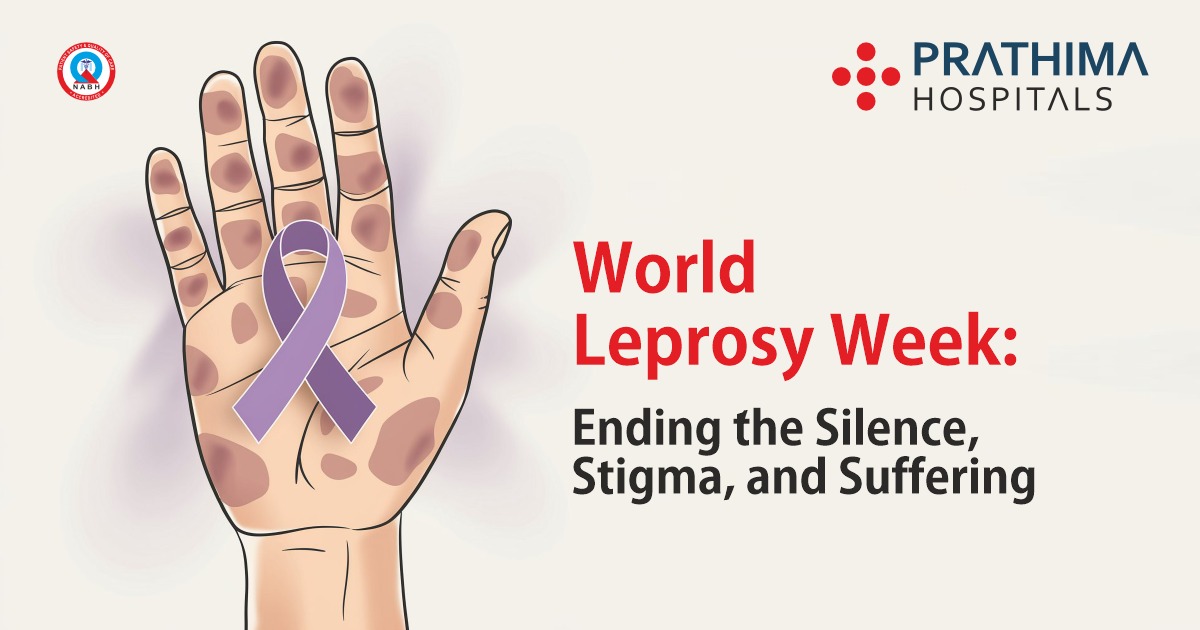
Raising Awareness, Ending Stigma, and Promoting Prevention
Every year, World Leprosy Week is observed in the last week of January to raise awareness about a disease that has been misunderstood, feared, and stigmatized for centuries. While medical science has made remarkable progress in diagnosing and treating leprosy, social myths and discrimination continue to affect thousands of lives.
At leading healthcare institutions recognized as the Best hospital in Telangana, awareness initiatives like World Leprosy Week play a vital role in educating communities and encouraging early treatment.
This week is not just about highlighting a disease; it is about restoring dignity, spreading correct information, and reminding the world that leprosy is curable, preventable, and should never be a reason for isolation or shame.
Understanding Leprosy: More Than a Disease
Leprosy, also known as Hansen’s disease, is a chronic infectious condition caused by Mycobacterium leprae. It mainly affects the skin, peripheral nerves, eyes, and respiratory tract.
Contrary to common belief:
- Leprosy is not highly contagious
- It spreads only through prolonged close contact
- It is completely curable with early diagnosis and treatment
- Patients on treatment do not transmit the disease
Despite these facts, fear and misinformation continue to isolate those affected, highlighting the need for trusted care from facilities known as the Best hospital in Kachiguda and surrounding regions.
Why World Leprosy Week Matters?
World Leprosy Week serves as a reminder that:
- Leprosy still exists
- Early detection can prevent disability
- Social stigma causes more damage than the disease itself
- Every patient deserves compassion, care, and dignity
The week encourages governments, healthcare professionals, and communities to work together to eliminate not only the disease but also the discrimination attached to it.
The Burden of Leprosy: A Global and Indian Perspective
Although leprosy is curable, India accounts for a significant proportion of global cases. Many patients still present late due to:
- Fear of social rejection
- Lack of awareness
- Limited access to healthcare in rural areas
- Misconceptions passed down through generations
Late diagnosis often leads to:
- Nerve damage
- Loss of sensation
- Deformities of hands and feet
- Vision problems
- Permanent disability
Late diagnosis often leads to nerve damage, deformities, vision problems, and permanent disability—most of which are preventable with timely treatment at advanced centers such as the Best hospital in Kukatpally and other urban healthcare hubs.
Signs and Symptoms: What to Look Out For
Early identification saves lives and prevents lifelong complications. Common symptoms include:
- Light or reddish skin patches with reduced sensation
- Numbness or tingling in hands or feet
- Muscle weakness
- Thickened nerves
- Non-healing wounds
- Loss of eyebrows or eyelashes in advanced cases
Many patients ignore early signs because the patches are painless. This delay often leads to nerve damage that becomes irreversible.
Diagnosis and Treatment: Hope Through Medicine
The good news is that leprosy is completely curable through Multi-Drug Therapy (MDT) provided free of cost in many countries, including India.
Key facts about treatment:
- Treatment duration ranges from 6 to 12 months
- MDT is safe and effective
- Patients become non-infectious after starting treatment
- Early treatment prevents disability
- No isolation is required
Modern medicine has transformed leprosy from a feared disease into a manageable medical condition.
Breaking the Myths Around Leprosy
Despite medical progress, myths still exist. Let’s break a few common ones:
Myth
Leprosy is highly contagious
- It spreads only through prolonged close contact and is difficult to transmit.
Myth
Leprosy is a punishment or curse
- It is a bacterial infection, not a divine punishment.
Myth
Patients must be isolated
- Once on treatment, patients can live normal lives.
Myth
Leprosy causes immediate deformity
- Deformities occur only when treatment is delayed.
Education is the strongest weapon against fear.
The Emotional and Social Impact
Beyond physical symptoms, leprosy deeply affects a person’s mental and emotional health.
Many patients face:
- Social rejection
- Loss of employment
- Family separation
- Depression and anxiety
- Loss of self-esteem
Children affected by leprosy often drop out of school due to discrimination. Women face greater stigma, often being abandoned or hidden away.
World Leprosy Week reminds us that compassion heals faster than medicine.
Role of Healthcare Workers and Hospitals
Healthcare professionals play a crucial role in:
- Early detection
- Community education
- Providing stigma-free treatment
- Encouraging treatment adherence
- Rehabilitation and counseling
Hospitals and healthcare institutions must ensure:
- Respectful treatment
- Confidential care
- Awareness programs
- Community outreach
Hospitals recognized as the Best hospital in Telangana must continue to lead awareness programs and provide respectful, confidential, and inclusive care.
Leprosy and Disability: Prevention is the Key
Disability from leprosy occurs mainly due to:
- Late diagnosis
- Untreated nerve damage
- Repeated injuries due to loss of sensation
Preventive steps include:
- Early screening
- Regular nerve examinations
- Self-care education
- Protective footwear
- Physiotherapy when needed
With proper care, people affected by leprosy can lead independent and productive lives.
Community Awareness: Everyone Has a Role
Ending leprosy is not just the responsibility of doctors or governments. Communities play a vital role by:
- Encouraging early medical consultation
- Avoiding discrimination
- Supporting affected families
- Sharing accurate information
- Promoting inclusion
A society that accepts and supports patients helps in eliminating the disease faster than medicine alone.
World Leprosy Week
World Leprosy Week is not just a date on the calendar; it is a reminder to:
- Replace fear with facts
- Replace stigma with support
- Replace silence with awareness
It urges us to look beyond the disease and see human beings struggling for dignity and acceptance.
Moving Towards a Leprosy-Free Future
With modern medicine, government programs, and growing awareness, the dream of a leprosy-free world is achievable. What we need is:
- Early diagnosis
- Community participation
- Continued awareness
- Empathy over judgment
- No one should suffer because of ignorance.
- Healing Beyond Medicine
Leprosy is no longer a disease of fear; it is a disease of neglect and misinformation.
On this World Leprosy Week, let us pledge to:
- Spread awareness, not myths
- Show compassion, not fear
- Support patients, not isolate them
- Encourage treatment, not silence
At Prathima Hospitals, we believe healing goes beyond treating disease—it is about restoring dignity, hope, and humanity. By spreading awareness and compassion, we can work together to end leprosy and eliminate the stigma surrounding it, creating a more inclusive and healthier society.
.
.
For More Details:
 733 733 6600 | 040 4345 4345
 https://prathimahospitals.com/book-appointment/