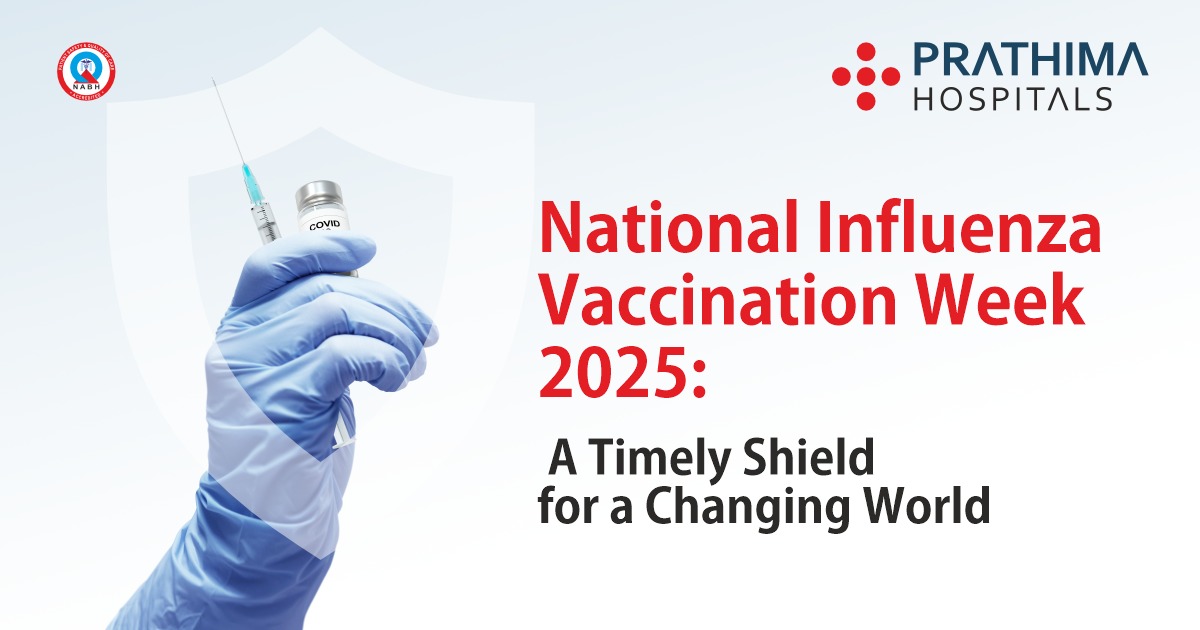
National Influenza Vaccination Week 2025: A Timely Shield for a Changing World
Seasonal influenza prevention
Every year, as winter settles in and respiratory illnesses rise, one infection quietly tightens its grip on communities across the world: seasonal influenza. It is familiar, often underestimated, and wrongly dismissed as a routine flu. Yet influenza continues to cause avoidable hospitalisations, complications, and deaths, especially among vulnerable groups. National Influenza Vaccination Week (NIVW), observed annually in December, serves as an urgent reminder that immunity is not merely a personal choice but a collective responsibility. At Prathima Hospitals, recognised as the Best Critical Care Hospital in Hyderabad, the importance of vaccination and respiratory care is reinforced every flu season.
In 2025, the message is sharper, clearer, and more relevant than ever: vaccination is the strongest defence to keep families, workplaces, and communities healthy through the peak flu season.
This blog explores influenza with a fresh perspective, why it still matters, what has changed in recent years, and how timely vaccination can reshape the health landscape for the coming months.
Understanding Influenza Beyond the Surface
Influenza is not a simple cold. It is a highly contagious respiratory infection caused by influenza viruses (Types A and B being the most common in humans). What makes influenza unpredictable is its ability to mutate and circulate in new forms every year. This genetic shift is exactly why last year’s immunity is not enough to protect against this year’s strain. As the Best Critical Care Hospital in Hyderabad, the importance of early diagnosis, vaccination, and advanced respiratory care is strongly emphasised.
For many healthy adults, influenza may cause days of fever, cough, body aches, and fatigue. However, for high-risk groups, older adults, children, pregnant women, and people with chronic illnesses, the consequences can be severe: pneumonia, myocarditis, worsening of diabetes or asthma, and in some cases, life-threatening complications.
Despite this, influenza continues to be perceived casually. The challenge is not lack of information; it is the myth that “influenza is harmless.”
National Influenza Vaccination Week takes aim at exactly this misconception.
Why NIVW 2025 Matters More Than Ever?
In recent years, health systems have seen shifts in respiratory infection patterns, early flu surges, prolonged seasons, and co-circulation with other viruses. These changes have made prevention a strategic necessity rather than an optional step.
NIVW 2025 focuses on one critical reminder: it is not too late to get vaccinated.
Even in December, immunity can be built in time for the peak months of January–March.
Here’s why this week has gained renewed urgency:
Longer, Unpredictable Flu Seasons
Climate variations, travel patterns, and lifestyle changes have extended flu circulation beyond traditional timelines. Vaccinating only in early winter is no longer enough; immunity must be broad and timely.
Increased Co-infections
Doctors are seeing more cases where influenza overlaps with other respiratory infections. Co-infections can worsen outcomes, making flu vaccination a first line of prevention.
High-Risk Groups Are Growing
Long-term illnesses, obesity, and chronic lifestyle diseases are more common today, placing a larger section of the population at greater risk of flu-related complications.
Protecting Healthcare Capacity
Flu outbreaks can strain hospitals, as both outpatient and emergency services face a sudden rise in respiratory cases. Vaccination reduces this burden by preventing severe infections.
The Influenza Vaccine: What’s New and Why It Works?
The influenza vaccine is updated yearly to match the most active strains circulating globally. This tailored approach is based on surveillance data from expert laboratories and health agencies across continents.
How does the vaccine work?
The vaccine trains the immune system to recognise specific influenza strains, so the body mounts a faster, stronger response when exposed to the actual virus. It cannot cause flu because it does not contain live infectious virus in the versions used for most adults.
Who should get vaccinated?
While vaccination is recommended for everyone above 6 months of age, it is especially crucial for:
- Adults above 50
- Pregnant women
- Children aged 6 months to 5 years
- People with asthma, heart disease, kidney disorders, diabetes, and lung diseases
- Individuals with weakened immunity
- Healthcare workers
- Caregivers for infants or elderly adults
What’s new in the 2025 formulations?
The 2025 vaccine formulations have been updated in alignment with the latest influenza A (H1N1 and H3N2) and influenza B lineages, offering improved coverage. Many centres, including Prathima Hospitals, the Best Hospital in Kachiguda, now offer quadrivalent vaccines, covering four dominant virus types.
Breaking Myths That Delay Protection
Misconceptions continue to be the biggest barrier to vaccination.
Here are some of the most common myths, addressed with clarity:
Myth 1: “I got vaccinated last year, so I’m protected.”
Not true. Flu viruses evolve annually, which is why the vaccine changes every year.
Myth 2: “Healthy people don’t need flu shots.”
Even healthy individuals can get severe flu and spread it to others. Vaccination prevents community outbreaks.
Myth 3: “The flu shot gives you the flu.”
Vaccines cannot cause influenza. Mild symptoms like tiredness or low fever are signs of immune activation, not infection.
Myth 4: “I will wait until someone gets sick around me.”
By the time cases rise, it’s already too late. The immune system needs about two weeks to build protection.
Myth 5: “Home remedies and immunity boosters are enough.”
While they support general wellness, they cannot prevent influenza infection.
The Broader Impact of Vaccination: A Community Shield
Vaccination is not just about preventing one person from falling ill, it is about creating a protective circle around communities.
Protecting the vulnerable
Infants, elderly individuals, and immune-compromised persons depend on those around them to reduce the spread of infection.
Reducing workplace absenteeism
Every winter, businesses face sudden employee shortages due to flu. Vaccinated teams stay healthier and more productive.
Safeguarding children’s learning
Schools and colleges experience spikes in absenteeism during flu season. Vaccination helps maintain continuity in education.
Preventing outbreaks in public spaces
Hospitals, public transport, offices, and crowded settings are transmission hotspots where vaccination significantly lowers spread.
Supporting healthcare systems
By reducing severe flu cases, hospitals can focus on emergency care and chronic disease management without seasonal overload.
NIVW 2025: A Week of Action, Awareness, and Prevention
National Influenza Vaccination Week is not a symbolic observance; it is a call for immediate action.
The key message is simple:
“If you haven’t received your flu shot yet, this is the time.”
During this week, hospitals, clinics, public health organisations, and community health workers intensify education, outreach, and vaccination drives. Many offer extended clinic hours, mobile vaccination units, and awareness sessions for high-risk groups.
Why does this timing matter?
Even though influenza begins circulating as early as October in some regions, cases commonly peak between December and March.
A vaccine taken during NIVW provides timely protection when infection rates rise sharply.
Practical Steps to Stay Protected This Season
Besides vaccination, a few habits can significantly reduce flu transmission:
- Wash your hands frequently, especially after coughing or sneezing
- Avoid touching your face with unwashed hands
- Maintain distance from those showing symptoms
- Cover the mouth and nose when coughing
- Stay home if you develop a fever or respiratory symptoms
- Keep indoor spaces well-ventilated
However, these practices work best when combined with the flu vaccine. No other measure offers the same level of protection. At Prathima Hospitals, the Best Hospital in Kukatpally, vaccination support and preventive care help ensure stronger protection during the flu season.
The Human Side of Prevention: Stories Behind the Data
Behind every statistic, there is a real person whose life was altered, or protected, by timely vaccination.
- An older adult with diabetes who avoided hospitalisation because of a flu shot
- A pregnant woman who protected both herself and her newborn with timely vaccination
- A schoolteacher who prevented a classroom outbreak
- A healthcare worker who stayed on duty through peak season because they remained flu-free
These everyday stories underline the real value of prevention. The flu vaccine is not just a medical product; it is a safeguard for families, livelihoods, and the rhythm of daily life.
A New Way of Thinking About Flu Protection
Traditionally, influenza vaccination has been perceived as a routine seasonal task. But the world is changing. So should our approach.
- Vaccination is not a backup plan; it is the frontline.
- It allows communities to prepare ahead rather than react after hospital beds start filling.
- Vaccination is not an individual act; it is a community commitment.
- When more people are vaccinated, the chain of transmission weakens, protecting those who cannot be vaccinated.
- Vaccination is not optional for high-risk groups; it is essential.
- Delaying the flu shot increases the risk for complications that could have been entirely prevented.
Vaccination is not about fear; it is about readiness.
A simple step can prevent weeks of illness, missed work, and potential complications.
A Week That Shapes the Season Ahead
National Influenza Vaccination Week 2025 is not just about awareness; it is about empowerment. It reminds us that we have the tools to prevent avoidable illness, protect vulnerable individuals, and ensure healthier winters for all. At Prathima Hospitals, the Best Hospital in Kukatpally and the Best Hospital in Kachiguda, awareness programs and timely vaccination services ensure stronger community protection.
Influenza may be seasonal, but our approach to prevention must be proactive. A timely vaccination strengthens the entire community, reduces disease burden, and supports the smooth functioning of health systems.
If you haven’t yet received your influenza vaccine this year, now is the moment. The protection you build today will safeguard the weeks and months ahead.
This week stands as a timely reminder: stronger immunity begins with one simple act, your annual flu vaccination.
.
.
For More Details:
📞 733 733 6600 | 040 4345 4345
🌐 https://prathimahospitals.com/book-appointment/